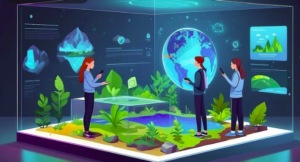
In today’s digital age, educational games have emerged as powerful tools for promoting environmental awareness among children and adults. By leveraging the latest in educational technology, these games provide interactive learning experiences that make complex environmental issues accessible and engaging. This article explores how educational games enhance environmental education, focusing on their impact, key features, and the potential of new technologies like NFTs and digital currency in this domain.
The Rise of Educational Games in Environmental Education
Educational games have come a long way from simple flashcards and quizzes. Modern educational games are sophisticated, immersive experiences that blend entertainment with education. These games are designed to teach players about natural resources, conservation, and the impact of human activities on the environment. Through interactive learning, players can understand and internalize the importance of protecting our planet.
One of the key benefits of educational games is their ability to simplify complex topics. For instance, a game focused on water conservation can demonstrate the effects of water waste and pollution through simulations and interactive scenarios. This hands-on approach helps players grasp the real-world implications of their actions in a way that traditional classroom teaching often cannot.

Gamification and User Experience
Gamification is the process of incorporating game-like elements into non-game contexts, and it plays a crucial role in educational games. By introducing rewards, challenges, and progress tracking, gamification enhances user engagement and motivation. Educational games that incorporate gamification techniques can make learning about environmental issues more enjoyable and compelling.
User experience (UX) is another critical factor in the success of educational games. A well-designed game with an intuitive interface and captivating graphics can significantly enhance the learning experience. Games that offer easy access across various devices ensure that users can engage with the content anytime, anywhere. This flexibility is particularly important for reaching a diverse audience, including children and adults with different levels of technological proficiency.
The Role of Technology Platforms and Gaming Platforms
The development of educational games relies heavily on robust technology platforms and gaming platforms. These platforms provide the infrastructure needed to create, distribute, and update games efficiently. Advances in game development software have made it easier for developers to create high-quality educational games that can run smoothly on multiple devices, from smartphones to PCs.
Gaming platforms also play a vital role in the dissemination of educational games. Platforms like Steam, Google Play, and the Apple App Store make it easy for users to discover and download educational games. By leveraging these platforms, developers can reach a broader audience and promote environmental awareness on a global scale.
Innovative Technologies: NFTs and Digital Currency
The integration of innovative technologies like NFTs (Non-Fungible Tokens) and digital currency into educational games is an emerging trend with significant potential. NFTs can be used to create unique digital art and collectibles that players can earn or purchase within the game. These digital assets can represent various environmental achievements or milestones, adding an extra layer of motivation for players to engage with the content.
Digital currency, on the other hand, can be used to facilitate in-game transactions, such as purchasing upgrades or unlocking new content. This not only enhances the gaming experience but also introduces players to the concept of digital economies. When used responsibly, these technologies can add value to educational games and create new opportunities for learning and engagement.

Adaptation Games and Environmental Awareness
Adaptation games are a specific genre of educational games that focus on how humans and ecosystems can adapt to environmental changes. These games often simulate real-world scenarios, such as climate change, natural disasters, and resource management. By playing adaptation games, users can explore different strategies for mitigating environmental impacts and learn about the importance of resilience and sustainability.
For example, a game that simulates the effects of rising sea levels on coastal cities can teach players about the importance of sustainable urban planning and the need for adaptive measures. Such games encourage critical thinking and problem-solving skills, which are essential for addressing the complex environmental challenges of our time.
In conclusion, Educational games are powerful tools for promoting environmental awareness among children and adults. By leveraging the latest in educational technology, gamification, and innovative technologies like NFTs and digital currency, these games provide engaging and accessible learning experiences. As technology continues to evolve, the potential for educational games to impact environmental education and foster a greater understanding of our planet’s challenges will only grow. By embracing these tools, we can inspire a new generation of environmentally conscious individuals ready to make a positive difference in the world.