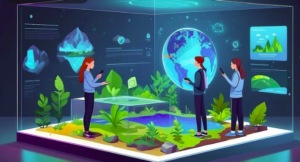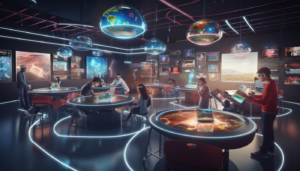
Environmental education has always been crucial in fostering an understanding and appreciation of our natural resources. However, traditional methods often fall short of engaging today’s tech-savvy youth. Enter gamification – the application of game-design elements in non-game contexts – which is revolutionizing how we learn about the environment. By integrating educational games into environmental education, we can create a more interactive and engaging experience for learners of all ages.
The Rise of Gamification in Education
Gamification in education leverages the natural human inclination towards competition and achievement. When applied to environmental education, it transforms passive learning into active participation. Educational games can simulate real-world scenarios, allowing learners to explore the impact of their decisions on the environment in a risk-free setting. This experiential learning approach helps to solidify concepts and encourages a deeper understanding of environmental issues.

Educational Technology: The Backbone of Gamification
Educational technology plays a pivotal role in the successful implementation of gamification. Advanced gaming platforms enable the creation of immersive and interactive learning experiences. These platforms often incorporate elements such as digital currency and NFTs (Non-fungible tokens) to incentivize participation and reward achievements. For example, students might earn digital currency for completing tasks related to sustainable practices, which they can then exchange for virtual rewards.
The Role of NFTs and Digital Art in Environmental Education
NFTs and digital art can significantly enhance the user experience in educational games. NFTs can be used to represent unique virtual items that players can collect, trade, or use within the game. This not only adds a layer of engagement but also teaches students about the value of digital assets and the principles of scarcity and ownership. Digital art, meanwhile, can be used to create visually appealing and educational content that captures the imagination of learners.
Interactive Learning Through Technology Platforms
Interactive learning is a cornerstone of modern educational technology. Technology platforms designed for education can provide easy access to a wealth of resources and tools that support gamified learning. These platforms often include features such as progress tracking, leaderboards, and social sharing options, which help to create a collaborative and competitive learning environment. Adaptation games, which adjust their difficulty based on the learner’s progress, ensure that students remain challenged and engaged.
Game Development for Environmental Education
Developing games specifically for environmental education requires a multidisciplinary approach. Game developers, educators, and environmental scientists must collaborate to create content that is both educational and entertaining. The games must be carefully designed to convey important environmental concepts while maintaining a high level of user engagement. This often involves creating realistic scenarios where players must make decisions that impact virtual ecosystems, thereby learning about the consequences of their actions in a controlled setting.
Benefits of Gamification in Environmental Education
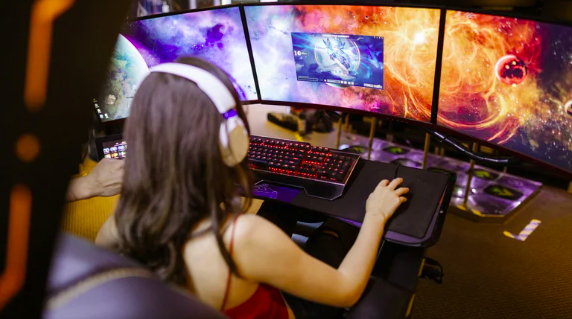
The benefits of gamification in environmental education are manifold. Firstly, it increases engagement by making learning fun and interactive. Students are more likely to retain information and develop a genuine interest in environmental issues when they are actively involved in the learning process. Secondly, gamification fosters critical thinking and problem-solving skills. By simulating real-world environmental challenges, students learn to analyze situations, consider various outcomes, and make informed decisions.
Conclusion: The Future of Experiential Learning
As we move forward, the integration of gamification into environmental education represents a promising future for experiential learning. By leveraging the power of educational technology, gaming platforms, and digital innovations such as NFTs and digital currency, we can create dynamic and engaging learning experiences that inspire the next generation to care for our planet. The combination of interactive learning and game development will undoubtedly play a crucial role in shaping environmentally conscious citizens who are equipped to tackle the challenges of the future.