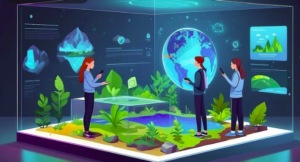
In today’s fast-paced world, traditional education methods are being complemented and sometimes replaced by innovative educational technologies. One of the most exciting developments in this realm is the use of educational games to promote environmental education. These games leverage advanced technology platforms to create engaging and interactive learning experiences that can significantly enhance the user experience. This article explores how educational games are revolutionizing environmental education, the importance of natural resources, and the role of gamification in creating impactful learning experiences.
The Rise of Educational Games
Educational games have become a pivotal tool in the modern education system. They provide an engaging way to learn complex subjects, making the learning process more enjoyable and effective. With the integration of advanced educational technology, these games have reached new heights in terms of content delivery and interactivity. Platforms designed for educational gaming offer easy access to a variety of learning resources, ensuring that learners of all ages can benefit from them.

Promoting Environmental Education
Environmental education is critical in today’s world as we face numerous ecological challenges. Understanding natural resources and their sustainable use is essential for fostering a generation that is conscious of environmental conservation. Educational games focused on environmental education are designed to teach these concepts in an interactive and engaging manner. Through game development, creators can simulate real-world environmental scenarios that require players to make decisions based on sustainability principles.
Gamification and Interactive Learning
Gamification is the process of incorporating game elements into non-game contexts to enhance engagement and motivation. In the realm of education, gamification can transform mundane subjects into exciting challenges. For instance, adaptation games that require players to adjust strategies based on environmental changes can teach crucial concepts about ecosystems and biodiversity. Interactive learning through games ensures that students are not just passive recipients of information but active participants in the learning process.
Leveraging Technology Platforms
Modern technology platforms play a significant role in the development and dissemination of educational games. These platforms provide the infrastructure needed to create complex games that are both educational and entertaining. They support the integration of various multimedia elements such as digital art and interactive features that enhance the overall user experience. Additionally, the advent of digital currency and NFTs (non-fungible tokens) has opened new avenues for game development, allowing for unique in-game assets and experiences that can be bought, sold, and traded.

The Future of Educational Games
The future of educational games is bright, with continuous advancements in technology promising even more immersive and effective learning tools. As the gaming industry evolves, we can expect to see more sophisticated educational games that not only cover environmental education but also other critical subjects. These games will likely incorporate more advanced gamification techniques, AI-driven adaptive learning, and even virtual reality experiences to provide an unparalleled learning environment.
In conclusion, Educational games are revolutionizing the way we approach learning, particularly in the field of environmental education. By utilizing cutting-edge educational technology and gamification techniques, these games offer an interactive and engaging way to learn about natural resources and sustainability. As technology continues to advance, the potential for educational games to make a significant impact on learning outcomes becomes even greater. With easy access to these games through modern technology platforms, learners worldwide can benefit from enhanced educational experiences that prepare them for the environmental challenges of the future.